
How to Restore Damaged Nails After Acrylics: Simple, Proven Methods
Acrylic nails can give you a beautiful, polished manicure, but after repeated applications or improper removal, your natural nails may feel thin, weak, dry, or unusually sensitive. Peeling, splitting, rough surfaces, and brittle edges are common signs that your nails need a break and some extra care. The good news is that damaged nails can gradually become stronger again with consistent, gentle care and a little patience.
Restoring your nails after acrylics is less about finding a quick fix and more about protecting the nail while healthy new growth replaces the damaged portion. Simple habits such as keeping nails short, moisturizing regularly, avoiding aggressive filing, and giving your nails time away from enhancements can make a noticeable difference. In this guide, you’ll learn practical ways to repair and protect damaged nails after acrylics while supporting healthier-looking natural nails.
1. Give Your Natural Nails a Break From Acrylics
The first step in recovering damaged nails is to give them time without another acrylic application. Applying a fresh set over nails that are already thin or peeling can conceal the damage temporarily without allowing the natural nail to recover. A break also makes it easier to notice changes in the nail’s condition and prevent additional stress.
How long your nails need to recover depends on how much damage occurred and how quickly your nails grow. Instead of focusing on a specific number of days, concentrate on keeping them protected while new nail grows from the base. Regular care during this period can help the new growth remain strong and healthy-looking.
- Avoid immediately applying another set of acrylics.
- Keep nails clean and dry.
- Protect them from unnecessary impact.
- Pay attention to peeling, splitting, or unusual sensitivity.

2. Keep Damaged Nails Short
Long nails can put additional pressure on weak areas, especially when the natural nail has become thin after acrylic removal. Keeping your nails short reduces the chance of catching them on clothing, opening containers, or accidentally bending them backward. This simple change can help prevent further splitting while your nails grow out.
Use a gentle nail file to maintain a smooth shape rather than repeatedly cutting or aggressively filing the surface. A rounded or softly squared shape can help minimize sharp corners that are more likely to catch. As healthier nail grows, you can gradually allow your preferred length to return.

3. Moisturize Your Nails and Cuticles Daily
Acrylic removal can leave both the nail plate and surrounding skin feeling dry. Regular moisturizing helps keep the nails and cuticles more supple, which can make them less prone to becoming excessively dry and rough. Cuticle oil, a nourishing nail treatment, or a simple moisturizer can be incorporated into your daily routine.
Apply your chosen moisturizer around the cuticles and over the nail surface several times throughout the day, particularly after washing your hands. Massage it gently into the nail and surrounding skin instead of rubbing aggressively. Consistency matters more than using a complicated routine.
- Moisturize after washing your hands.
- Massage product gently around each cuticle.
- Apply an extra layer before bedtime.
- Keep a small moisturizer nearby so daily application is easy.

4. Protect Your Nails From Water and Chemicals
Frequent exposure to water and household cleaning products can make already-fragile nails feel even more vulnerable. Soaking your hands for extended periods may contribute to dryness and weaken nails that are already recovering from acrylic application and removal.
Wear protective gloves when washing dishes or handling household cleaning products. Avoid using your nails as tools to scrape, pry, open, or pick at objects. Small changes like these reduce unnecessary mechanical stress and give your natural nails a better environment for growing out.

5. Avoid Picking or Peeling the Nail Surface
One of the most damaging habits during nail recovery is picking at areas that are already lifting or peeling. It can be tempting to remove loose layers, especially when the nail surface feels uneven after acrylics. However, pulling or peeling can remove additional layers of the natural nail.
Instead, carefully trim loose edges when appropriate and smooth rough areas with a fine nail file. Avoid repeatedly buffing the entire nail to make it look perfectly smooth. Your priority should be protecting the nail rather than immediately restoring a flawless cosmetic appearance.
6. Be Gentle With Nail Filing and Buffing
Aggressive filing can make thin nails even thinner. After acrylic removal, your natural nails may already have experienced filing during preparation and removal, so excessive buffing is usually unnecessary. Use a gentle file and light pressure when shaping the free edge.
Avoid using a coarse file directly across the surface of the nail. If the nail has minor roughness, resist the urge to keep buffing until it feels completely smooth. As damaged sections grow out, the appearance of the natural nail should gradually improve.

7. Use a Protective Nail Treatment
A simple protective nail treatment can help make fragile nails feel more comfortable and less exposed while they grow. Look for products designed specifically for natural nail care rather than relying on repeated layers of harsh or highly drying formulas.
Apply treatments according to their directions and give your nails time between applications when necessary. Remember that a treatment cannot instantly reverse damage that has already occurred. The damaged portion generally needs to grow out while you protect the newer nail emerging from the nail matrix.
8. Support Nail Growth With Good Nutrition
Healthy nail growth depends on your overall nutritional status, so maintaining a balanced diet is an important part of long-term nail care. Include a variety of protein-rich foods, vegetables, fruits, whole grains, and other nutrient-dense foods in your regular meals.
There is no need to rely on expensive supplements simply because your nails became damaged after acrylics. If you already eat a varied diet, focus on maintaining consistent eating habits rather than searching for a single “nail growth” ingredient. If you suspect a nutritional deficiency or notice persistent changes in your nails, discuss it with a healthcare professional.

9. Avoid Repeated Acrylic Removal and Harsh DIY Techniques
Repeated cycles of acrylic application and removal can place ongoing stress on natural nails. The removal process is especially important because forcefully pulling, prying, or scraping artificial nails from the natural nail can cause additional damage.
Never rip acrylics off when they begin lifting. Follow a proper soak-off removal process or have them professionally removed when necessary. Once your nails are already damaged, giving them a period without additional enhancements can be one of the simplest ways to reduce repeated stress.
10. Protect Your Nails While They Grow Out
Nail recovery requires patience because the damaged portion of the nail does not simply repair itself overnight. Your goal is to protect the existing nail while healthy new growth gradually replaces the affected section. Keeping your nails short, moisturized, and protected can help you avoid setbacks.
You may notice gradual improvements in texture and strength as the nail grows. Keep your routine simple and consistent rather than constantly changing treatments. Once your nails feel stronger, you can consider returning to your preferred manicure routine while continuing to prioritize gentle preparation and removal.
Signs Your Nails May Need Extra Attention
Most mild acrylic-related nail damage can improve as the nail grows out, but certain symptoms should not be ignored. Persistent pain, significant swelling, unusual discoloration, separation of the nail from the nail bed, or signs of infection deserve professional evaluation rather than additional cosmetic treatments.
If your nails remain unusually weak or damaged despite allowing them time to grow, consider speaking with a dermatologist or other qualified healthcare professional. Persistent nail changes can sometimes have causes unrelated to acrylics, so it is important not to assume that every nail problem is simply cosmetic damage.
Simple Post-Acrylic Nail Recovery Routine
A consistent routine can make nail recovery easier without requiring a large collection of products. In the morning, check your nails for cracks or rough edges and apply moisturizer to your hands and cuticles. During the day, protect your hands from harsh chemicals and avoid using your nails as tools.
At night, gently clean your hands, apply cuticle oil or moisturizer, and massage it around the nail and surrounding skin. Keep your nails at a manageable length and file only when needed. Following these small habits consistently can help protect your natural nails as they grow.
How Long Does It Take to Restore Damaged Nails After Acrylics?
There is no universal recovery timeline because nail damage varies from person to person. Your nails need to grow out rather than instantly regenerate the damaged portion, and fingernails typically grow slowly. You may notice improvements as new nail emerges, but replacing an entire fingernail can take several months.
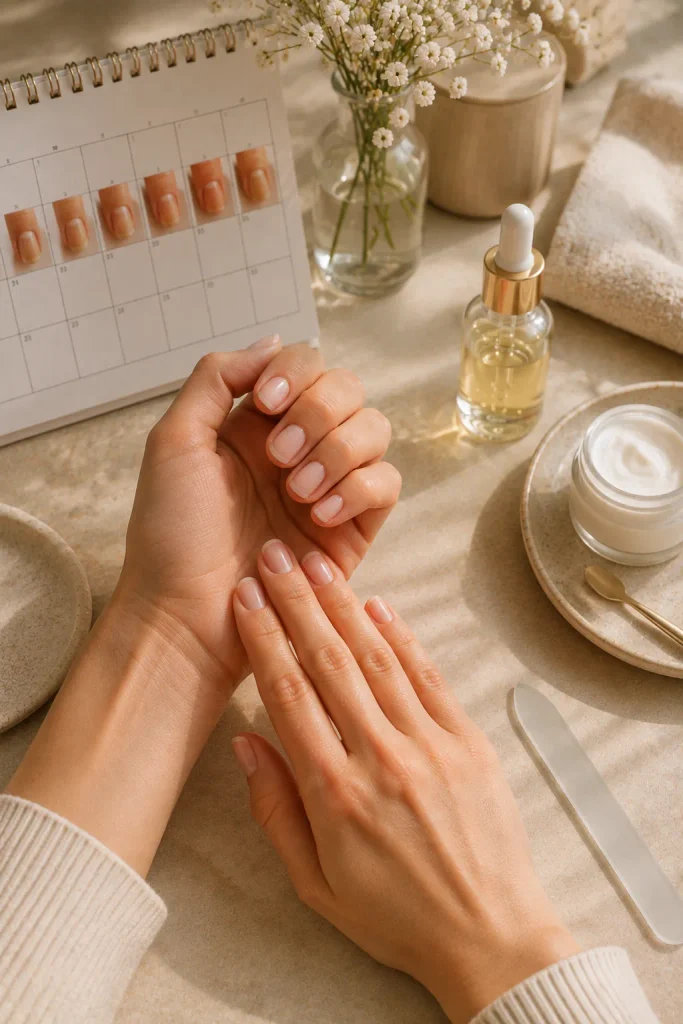
The most important factor is consistency. Avoiding additional trauma, maintaining moisture, protecting your hands, and allowing new growth to replace damaged areas can gradually improve the appearance and feel of your nails. Taking progress photos every few weeks can also help you notice changes that are difficult to see from day to day.
Final Thoughts
Restoring damaged nails after acrylics does not require an elaborate routine. The most effective approach is to give your natural nails a break, keep them short, moisturize the nails and cuticles, protect your hands, and avoid picking, peeling, or aggressive filing. Healthy-looking nails take time, so patience is just as important as the products you use.
Once your nails have grown out and feel stronger, continue treating them gently to reduce the risk of repeated damage. With consistent care and fewer harsh habits, your natural nails can gradually return to a smoother, stronger, healthier-looking appearance.





2 Comments